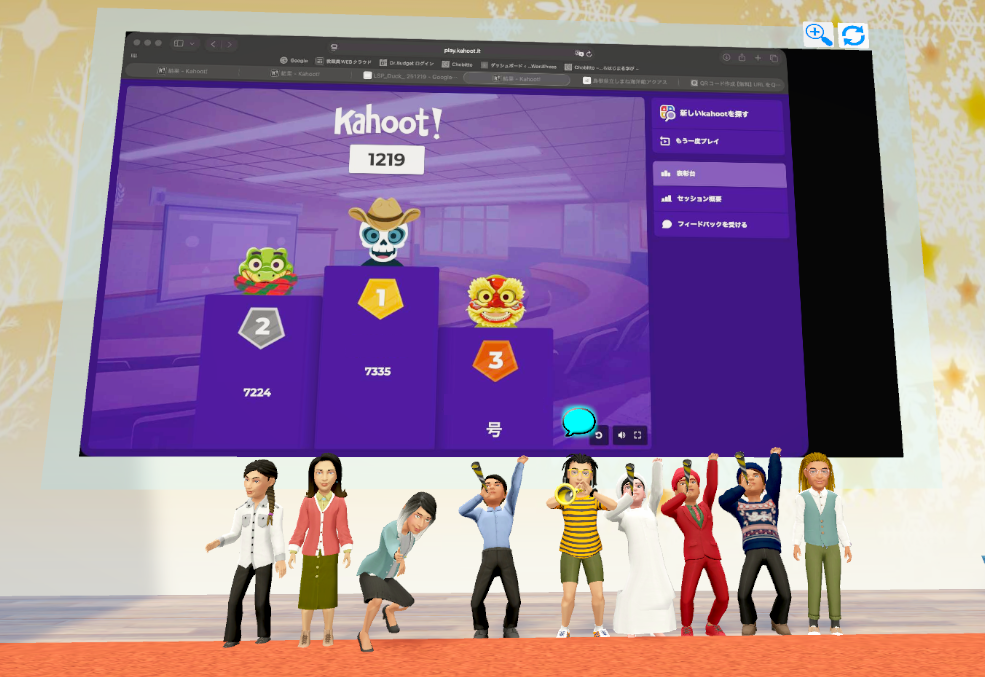
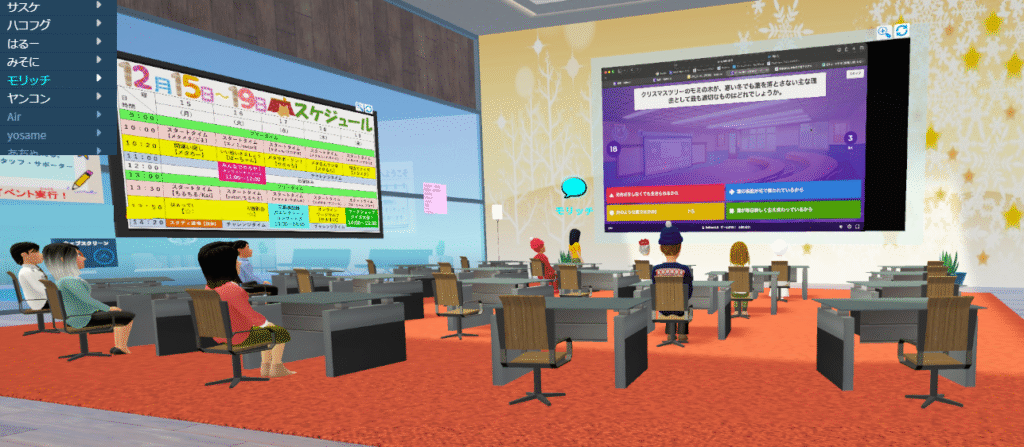
On December 19, 2025, we held the final workshop of the year at the Meta Support Campus.
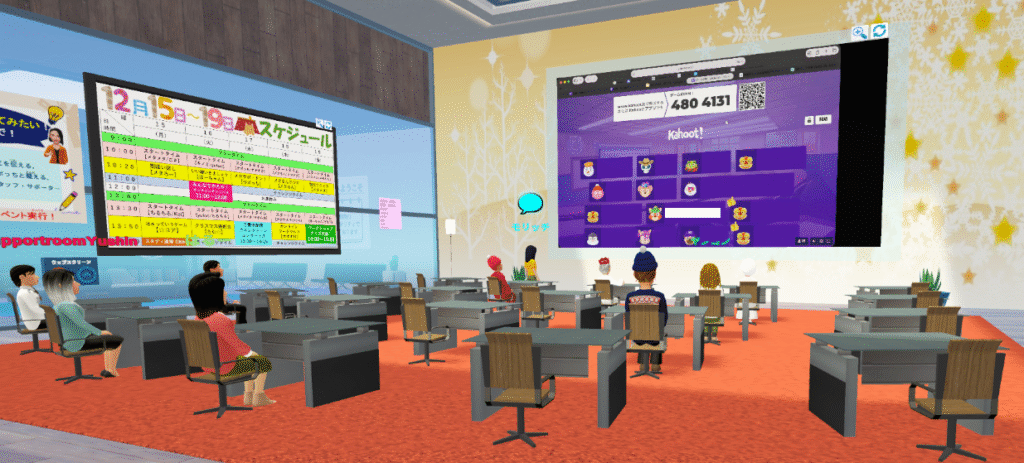
We conducted a quiz competition using Kahoot!, which we’ve been holding regularly since last year. Participants submitted multiple-choice questions in advance via Google Forms. This time, we used the 43 questions collected to run four rounds of quizzes: three rounds of 10 questions each and one round of 13 questions.
The quiz covered a wide range of topics, from current events to questions about Ehime Prefecture, anime, games, TV shows, and even questions about the children and staff who gather at Meta Support Campus. We enjoyed these diverse questions in a quiz competition format. When extremely personal questions like “You’ll never know this!” appeared, you could hear the text screams in the chat.
After leisurely enjoying the four quiz rounds, we created additional questions and held a final quiz showdown using the newly created quizzes. Any quizzes we couldn’t use this time will be carried over to the next workshop. Including the pre-made questions, a total of 71 questions were generated during this workshop. Participants also suggested ideas for the next quiz competition, such as soliciting questions categorized by theme.
Professor Mitchell Resnick of the Massachusetts Institute of Technology (MIT), the developer of Scratch, advocates the Creative Learning Spiral as a cycle of learning through “making.” The cycle goes from Imagine – Create – Play – Share – Reflect, and then back to Imagine again.
The quiz contest also started with me preparing questions for the participants to try. After that, they created their own questions before the workshop, played with them during the workshop, and shared their quizzes. They reflected on participants’ reactions and response patterns to the quizzes posed, then tackled creating the next set of questions. Though only a one-hour workshop, the Creative Learning Spiral may well have been unfolding within it.
After the workshop, teachers involved in running Metasapo Campus kindly assisted with interviews for a seminar student researching “Creating Safe Spaces for Children Outside School” as their graduation thesis. I myself sat alongside the student and listened to the interviews.
This marks my third year involved with the Meta Support Campus. While I learn a great deal through workshop practice, such as supporting children in the metaverse, another significant lesson for me has been observing how the teachers interact with the children. I always quietly observe and learn everything about their interactions – not just the content or timing of their words, but also their tone, phrasing, and intonation. Of course, each teacher has their own style, but at the same time, I sensed some common threads. At the end of the interview, I asked about this point that had been on my mind for a while.
They mentioned that while there isn’t any special training on communication, the teachers sit close together, wearing headsets to support the children. They hear each other’s interactions with the children daily, and that might be influencing them. The kind of mutual learning among teachers through supporting children, which is difficult in a single-teacher classroom, might be easier to foster in the metaverse space.
And during each workshop, while listening to the teachers’ interactions, I find myself unconsciously mimicking them. This workshop and interview reaffirmed my deep gratitude for the learning opportunities I’ve been given.
Thank you for providing such valuable opportunities again this year.
I look forward to your continued support next year.