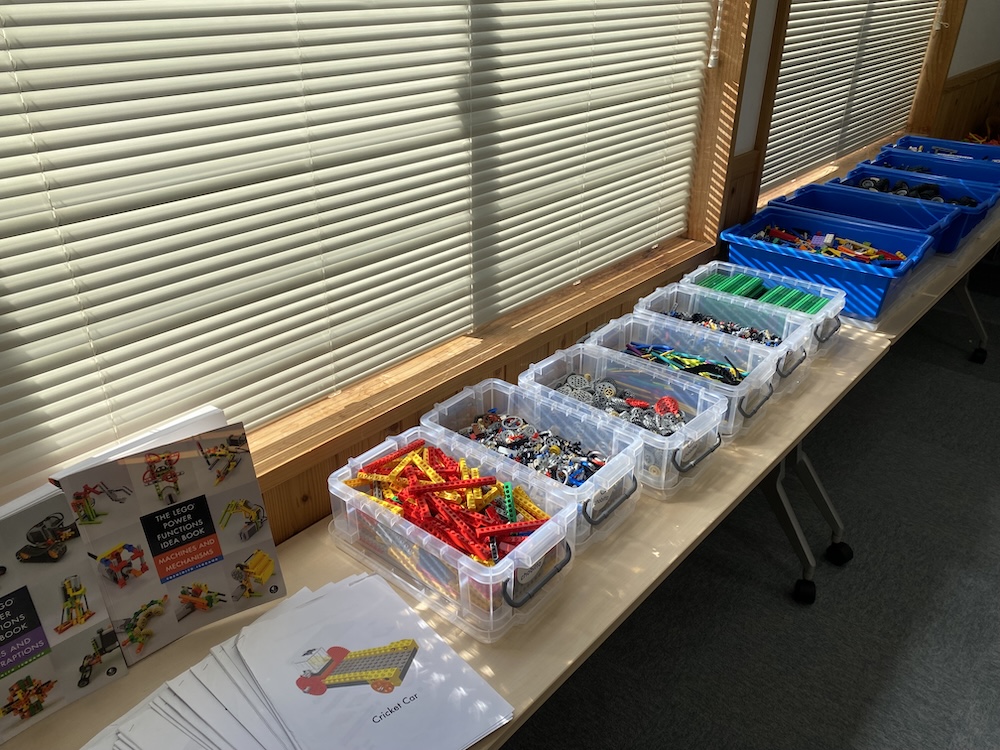
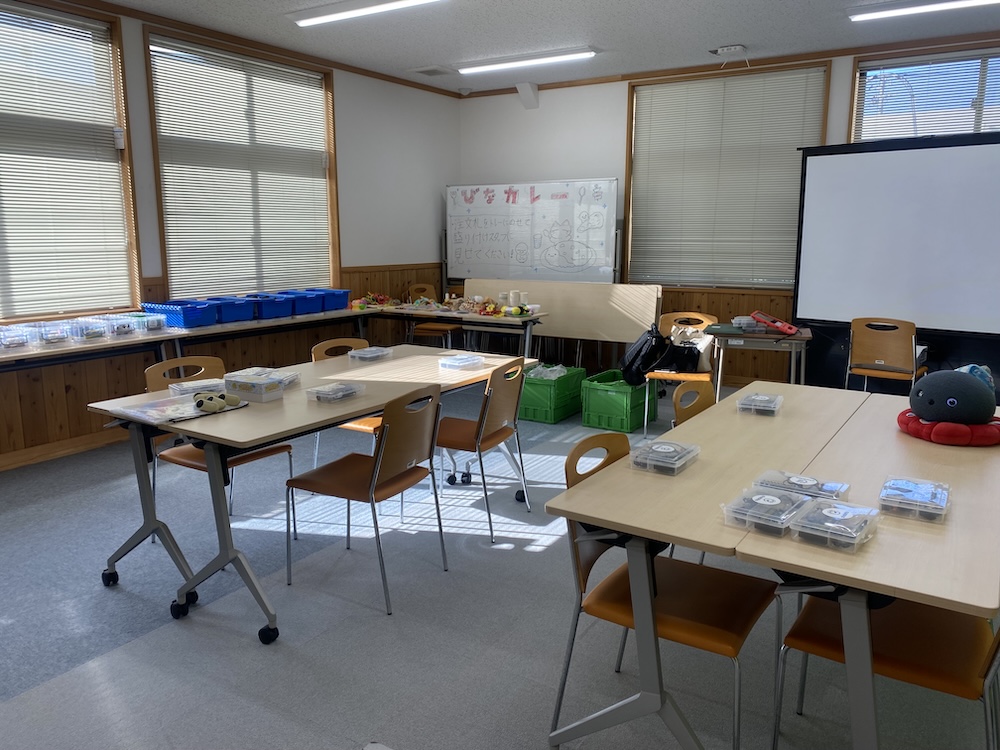
On December 12, 2025, we held a workshop at Ebina City’s educational support classroom, “Binaroom.”
This time, with the goal of introducing the tools I’ve used in my past practice to the children and teachers, I presented the OctoStudio and micro:bit (with Chobitto board) alongside the Programmable Battery, allowing them to actually handle and experience these tools. I also shared examples from past workshops and introduced a recent programming workshop utilizing generative AI.
As a result, participants experienced the potential of combining multiple tools—such as photographing creations made with the programmable battery and then animating them in OctoStudio. While previous workshops typically focused on creating with a single tool, allowing participants to choose their own tools feels closer to the spirit of a workshop as a “workshop space.”
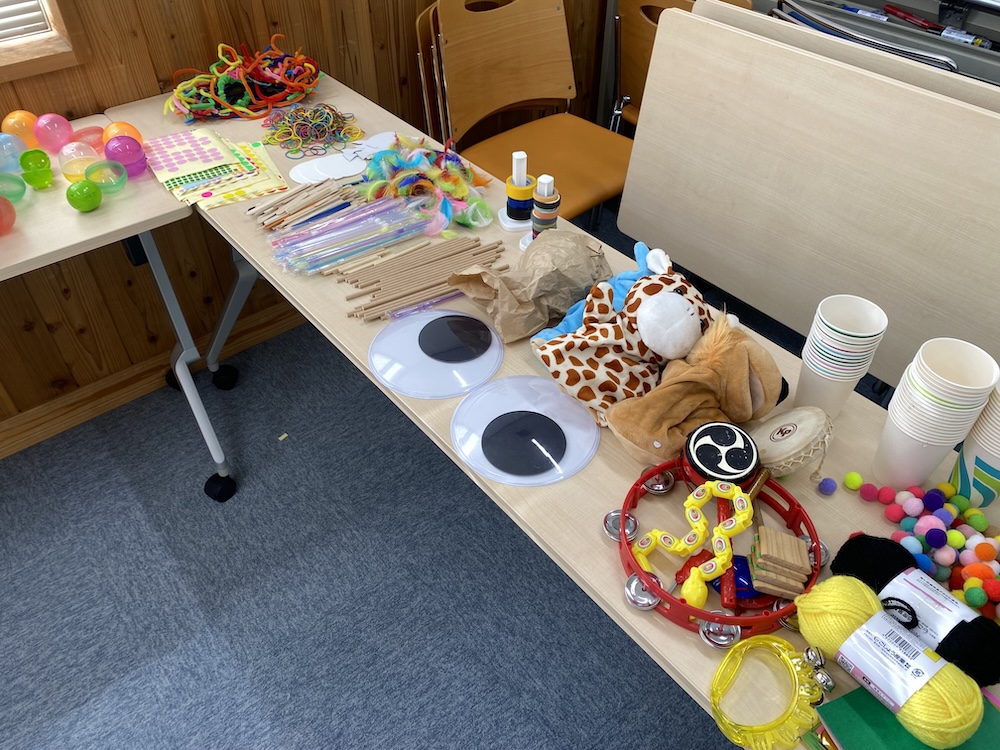
NICOBO, who joined us again this time, also seemed to help lighten the mood. We even saw a creation featuring NICOBO drawn in OctoStudio, reaffirming how significant NICOBO’s presence is in our workshops. Participants also played with the Ratatone educational instrument we brought as an icebreaker before the workshop.
This workshop provided many insights for considering the creation of a permanent space, like the “Computer Clubhouse” I’m currently envisioning, as a place for both children and adults. When a workshop becomes (or returns to being) a space where various tools can be freely used, what becomes most important for us who handle preparation and operation?
This time, I agonized over which tools to prepare and what materials to provide right up until the day before. Even on the day itself, we constantly had to consider when to introduce the next tool while observing participants’ activities. Questions like how to provide appropriate engagement at the right moment—whether when a project reached a natural pause or when a current project seemed poised to evolve with a new tool—likely overlap with challenges programming education has faced historically and probably still faces today. Viewed more broadly, it could be seen as a barrier inevitably encountered when aiming for “optimized learning for each individual.”
The foundation of such support likely lies in discerning what the participant wants to do, what their project is at that moment, and what they wish to achieve. Seeing advice given with the intent to support fail to land well, leading the project to take a different form, sometimes makes me feel apologetic, wondering if my involvement was insufficient. Yet simultaneously, I also feel joy when the participant’s project finds expression in ways that surpass my own imagination.
Perhaps framing it as “support” isn’t even appropriate to begin with. The term “support” inevitably creates a hierarchical relationship between the supporter and the supported. It’s simply a matter of having different knowledge or experience at that particular moment; fundamentally, it should be a relationship of thinking and learning together. Couldn’t we have a more fluid way of interacting, where the hierarchy constantly shifts depending on the situation? This workshop made me think about such things